
The Castan Centre
Human Rights Blog
-
Under-16s social media ban abandons LGBTIQA+ and marginalised youth
The federal government’s decision to ban under-16s from social media just as they’re about to start the long summer holidays, and only a couple of weeks before Christmas, is cruel. And the significant harm that this ban will cause will be disproportionally felt by already marginalised, vulnerable youth, including LGBTIQA+ young people.
-
Two teens have launched a High Court challenge to the under-16s social media ban. Will it make a difference?
Two teenagers are taking the federal government to the High Court. They argue the ban on social media accounts for under-16s is unconstitutional because it interferes with free political communication. The ban is due to take effect on December 10. Will the High Court challenge make any difference?
-
Windows of Opportunity: Charting Australia’s Human Rights Future
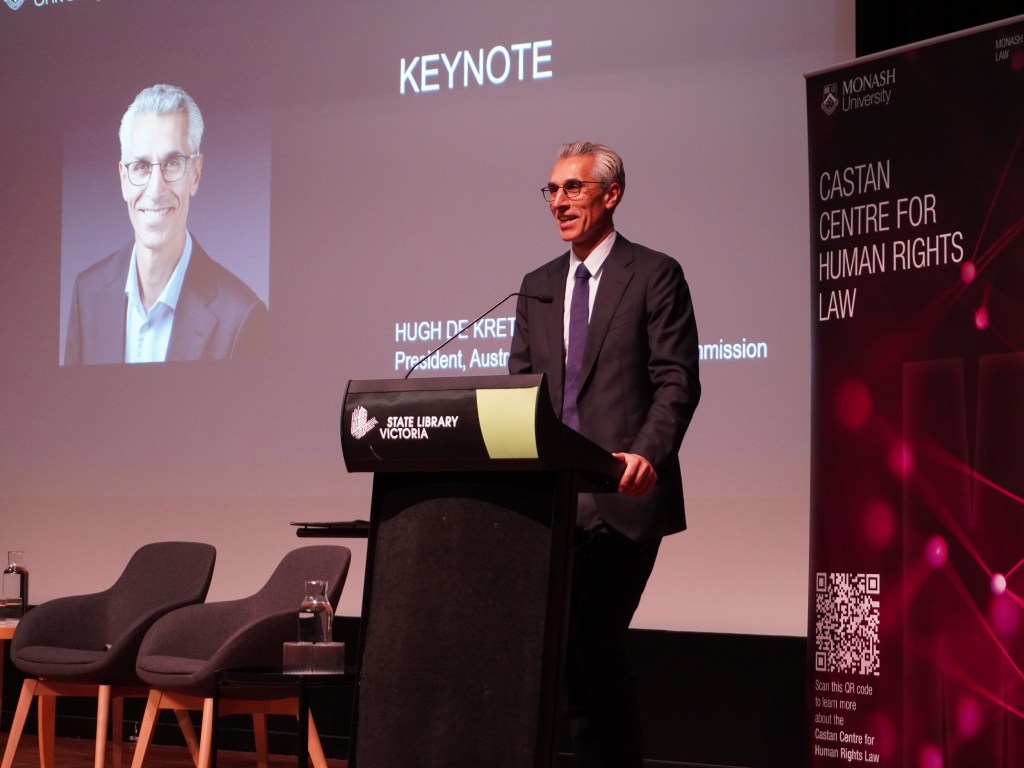
Australia’s human rights record will be scrutinised at the United Nations Human Rights Council in January 2026 in a process known as the Universal Periodic Review. voluntary commitments to improve human rights as part of the review and respond to the recommendations. So how are we doing on human rights?
-

You can’t handle the truth! If the NT wants to silence coroners from exposing systemic racism, then the Federal Government must step in
This is the second in our series of blogs from the 2025 Annual Castan Centre for Human Rights Law Conference. George Newhouse spoke in a session on understanding human rights law in the coronial jurisdiction.
-
As Giggle v Tickle heads to appeal, it’s more important than ever to fight anti-trans discrimination
This is the first in our series of blogs from the 2025 Annual Castan Centre for Human Rights Law Conference. Professor Paula Gerber chaired a session on challenges in securing the rights of trans and gender diverse people.
-
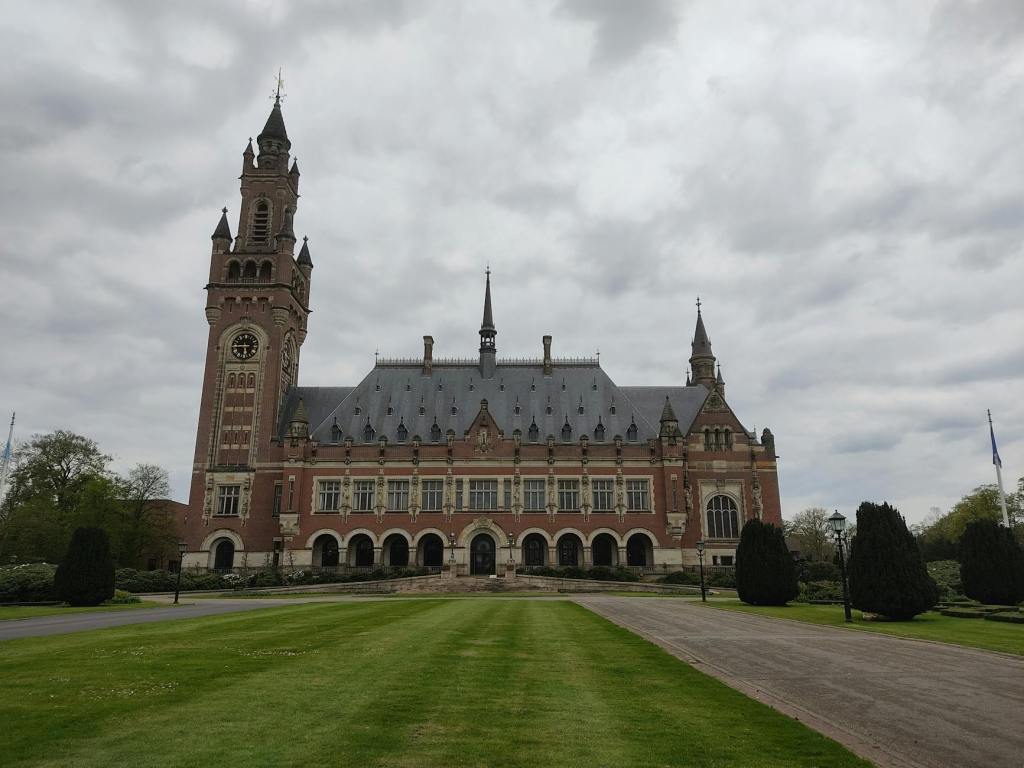
The International Court of Justice (ICJ) Advisory Opinion on Climate Change: A Landmark Decision on International Environmental Law
On 23 July, the International Court of Justice (ICJ) delivered its landmark advisory opinion on Climate Change. The Court recognised that climate change poses an existential threat to both ecosystems and human rights. The Court stated that states have human rights obligations to address climate change, and these obligations have an Erga Omnes character, owed…
-
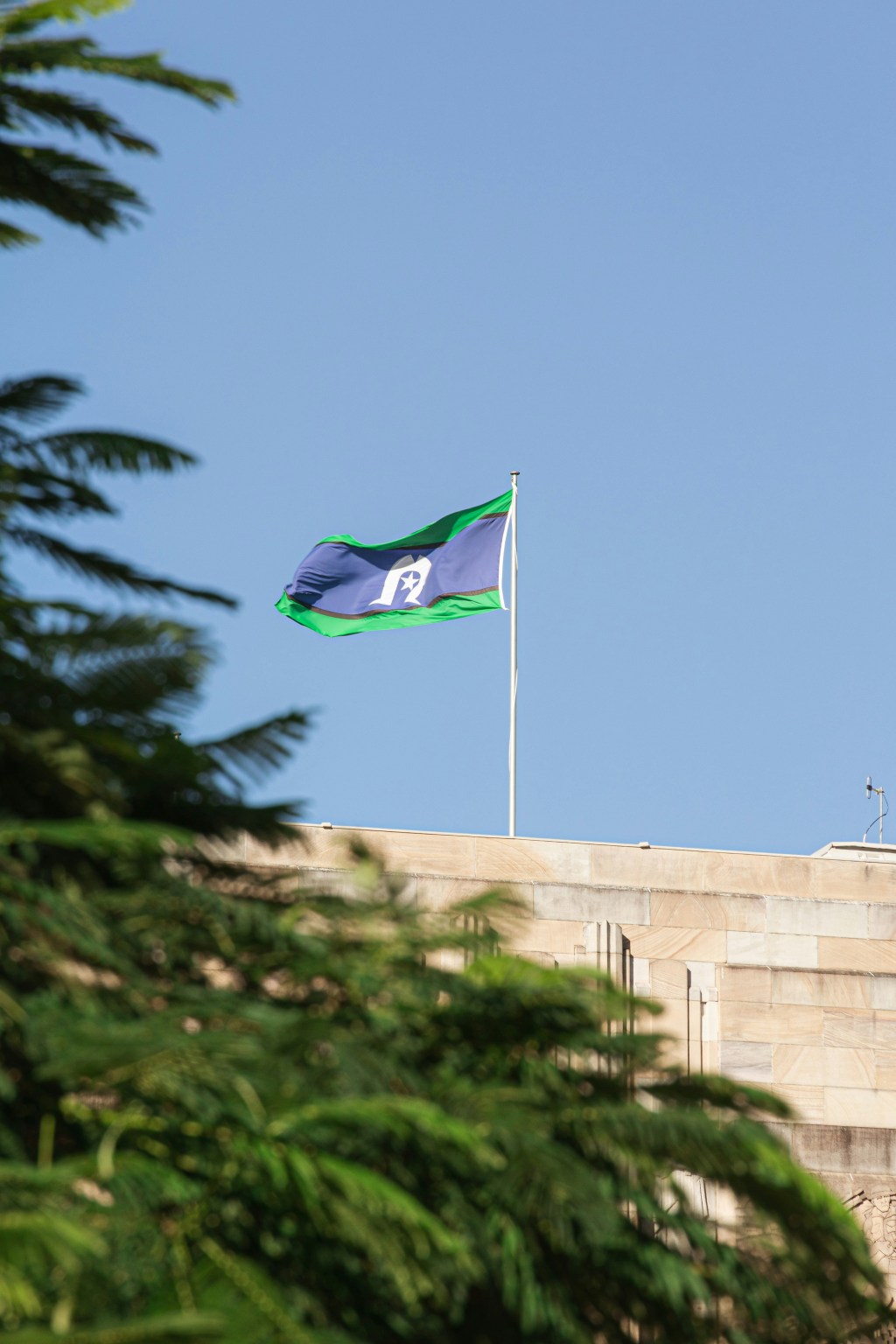
One Step Forward, Two Steps Back: The Australian Climate Case and Climate Justice in Australia
The Federal Court of Australia has handed down its highly anticipated judgment in the Australian Climate Case, a four-year climate case brought by Torres Strait Islanders against the Commonwealth.
-
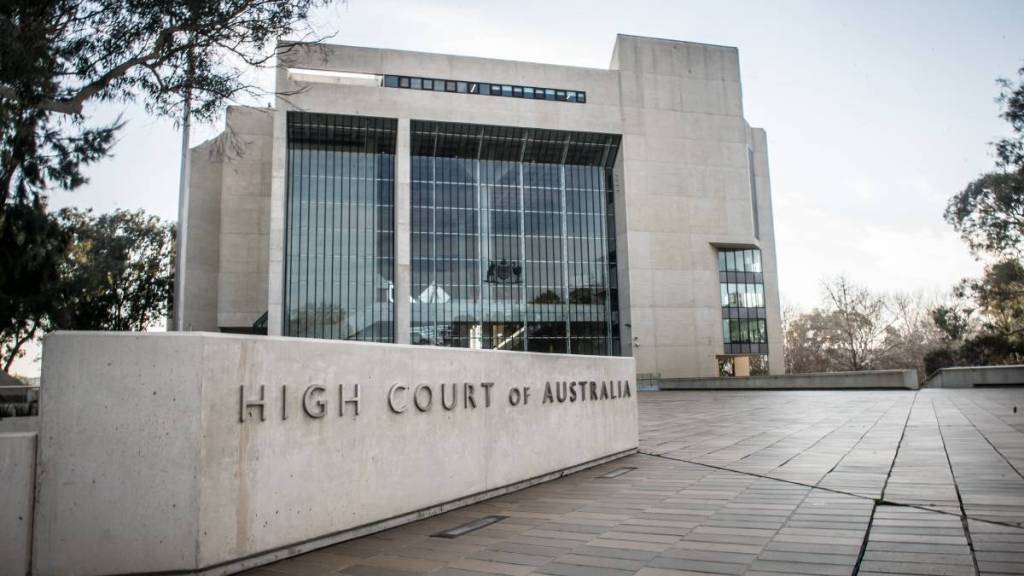
Peter Dutton wants to deport criminal dual citizens. We already have laws for that
Opposition Leader Peter Dutton has floated the idea of amending the Australian Constitution to allow government ministers to strip dual citizens of their Australian citizenship if they commit serious crimes related to terrorism. Dual citizens can already lose their Australian citizenship if they commit terrorism offences. So what does the Constitution say about the issue?
-

Three reasons why Australia is unlikely to follow Trump’s anti-trans campaign
Many people’s heads are spinning at the rapid rate that Donald Trump has been signing executive orders since becoming president – 70 in the 30 days since he took office. This is in stark contrast to Joe Biden, who averaged 41 executive orders a year, and Barack Obama, who averaged 35 a year. Several of Trump’s executive orders,…
-
How many deaths will it take before Australia has a Human Rights Act?
Recent cases in the Coroners Court reflect systemic failings in the care of vulnerable people – systemic failings that resulted from a failure to protect, respect, and fulfil human rights, leading to individual’s deaths. What different would a Human Rights Act make in such cases?
-

Why We Need to Protect Sibling Relationships under Human Rights Law
Iconic rock band Oasis has announced a reunion tour, 16 years after the feuding brothers, Liam and Noel Gallagher, disbanded the band. The brothers announced: “The guns have fallen silent. The stars have aligned. The great wait is over. Come see. It will not be televised.” This reflects the strength and resilience of sibling relationships, which are…
-

Roxanne Tickle’s Win in the Federal Court is a Historic Victory for Transgender Women
It’s been a case closely watched by the transgender community and legal minds alike. Last week in the Federal Court of Australia, a judge ruled in favour of trans woman Roxanne Tickle in her anti-discrimination case against a social media app. Much of proceedings have centred around what constitutes a woman under Australian law, and whether someone’s…
-

Lawyer X Scandal: Denying the Rights of those Affected Comes at a Cost
The Victorian government has introduced legislation into parliament that will override the Charter of Human Rights and Responsibilities Act 2006 (Vic) (“Charter”). The State Civil Liability (Police Informants) Bill 2024 extinguishes civil actions arising out of the Lawyer X saga, in which criminal barrister Nicola Gobbo became an informant for Victoria Police.
-

An inquiry has recommended Australia legislate a Human Rights Act. Here’s why we need one
Australia is the only Western democracy that does not have a national Human Rights Act, but this may be about to change.
-

Launch of Australia’s National Prison Newspaper
Australian prisons are restrictive, closed-off and opaque environments. Little information travels across prison cells and there is minimal communication between inside and out. While the UK, the US and many European countries support popular prison journalism initiatives, Australia has no equivalent. Beginning in July this year, a new company represented by formerly incarcerated people, lawyers,…
-
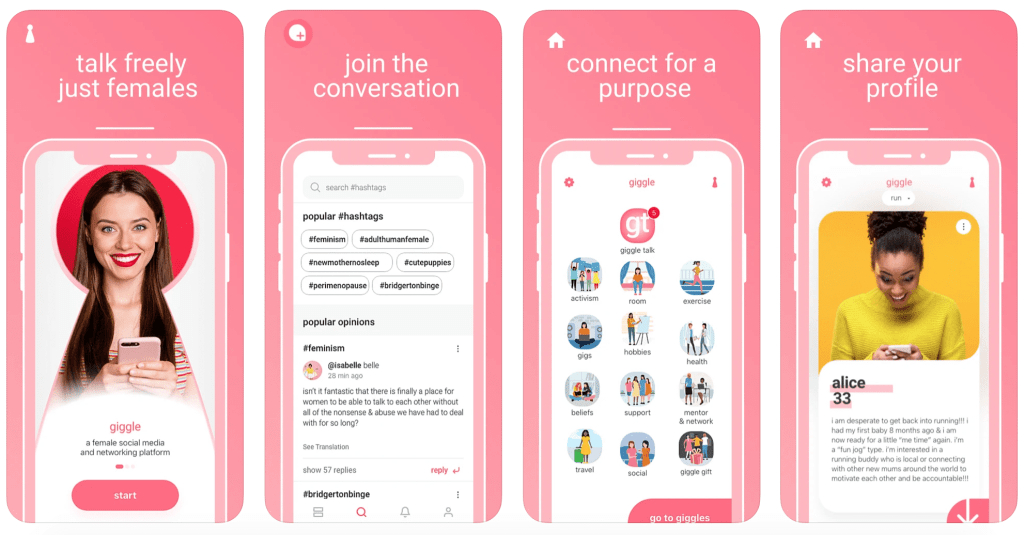
Tickle vs Giggle: in a world where transgender people are under attack, this is a test case for Australia
There is increasing concern that a US-style anti-trans campaign is underway in Australia. A spotlight was shone on these issues in the Federal Court, where a trans woman, Roxanne Tickle, has taken a women-only social media platform to court for discrimination. This case is providing the court with a rare opportunity to determine the extent to which the Sex…
-

Following the Voice failure, Indigenous politicians are calling for the UN’s Declaration on the Rights of Indigenous Peoples to be implemented. What is it and what would it mean?
The Voice referendum was a disappointing result for many, but there is hope that much of its vision could be achieved via a different path. The Joint Standing Committee on Aboriginal and Torres Strait Islander Affairs has presented a report to federal parliament calling for the implementation of the United Nations Declaration on the Rights of Indigenous Peoples.
-
After the Voice defeat, we can never again allow politics to suspend the cause of Indigenous justice
Australians rejected the proposal for a Voice to Parliament embedded in the constitution. This week marked 100 days since that unsuccessful referendum. By now we expected those who campaigned against the constitutional reform would have stepped up with their proposals about how to improve the lives of Indigenous Australians. Alas, there has been only a deafening…
-

The Voice: It’s a Marriage Proposal not a Divorce Petition
The No campaign repeatedly says that Australians should not support the Voice because it is divisive. This fundamentally misconstrues what we are being asked to vote on. The Voice is like a marriage proposal, not a divorce petition. It is about unity, not division.
-

The untold story of disability discrimination in Australia’s election and referendum procedures
Australia has been called ’the most voter-friendly country in the world’, a label which obscures the fact that Australia’s electoral laws deny some people with physical or motor disabilities the opportunity to cast a genuinely secret vote, and infringe upon their right to equal participation. Efforts to amend this issue have thus far fallen on…
-

“For with them our futures rest”: Reflections on the Voice to Parliament from a lifetime advocating for the self-determination of Aboriginal and Torres Strait Islander children
Reflecting on a lifetime on advocating for self-determination of Aboriginal and Torres Strait Islander children, Adjunct Professor Muriel Bamblett reflects on the upcoming referendum on a First Nations Voice.
-

‘Ask Us First’: a student-lead Castan Centre for Human Rights Law Voice to Parliament Clinic project
Last week, we launched a video campaign for the upcoming referendum. First Nations professors, artists, athletes and experts answer Australia’s questions about the Voice to Parliament. Designed to restore fact, nuance and personal perspectives to the Voice conversation, ASK US FIRST was created by Monash University law students in the Castan Centre Voice to Parliament…
-

The Voice referendum is in the national interest
Despite the political debate that has ensued around the Voice proposal, the choice of an institutional advisory body that informs Parliament and the executive government is entirely unremarkable. It is a modest proposal.
-

It’s a date: Now the referendum’s set, we need to focus on the facts
14 OCTOBER, 2023: This is a date that will forever be part of Australia’s history.It’s the day Australia will decide whether or not to amend our Constitution to recognise Aboriginal and Torres Strait Islander peoples as the First Peoples of Australia, and to establish the Voice as the body through which Aboriginal and Torres Strait…
-

Gender apartheid in Iran and Afghanistan: Recognising the crime in international law
Women in Iran are under direct attack by the Iranian regime, and in Afghanistan, the Taliban wishes to erase them from society completely. The situation worsens when intersectional factors are taken into consideration, such as ethnicity and religion. While gender-based persecution is recognised as one of the crimes against humanity, segregation and subjugation on the…
-

Why is the Voice to Parliament focused just on Indigenous Australians?Why no Voice vote for all minorities?
One of the questions people are asking about the Voice to Parliament is why the proposed amendment to the constitution is to create a voice for one group only? Why a Voice for Indigenous Australians, but not a voice for people with disabilities? Or for Muslims? Or for women? Or for LGBTQ+ people? This is…
-

Why is it legal to tell lies during the Voice referendum campaign?
A referendum to recognise First Nations Australians in Australia’s Constitution by establishing a Voice to Parliament will be held later this year. The Voice would be an advisory body allowing Aboriginal and Torres Strait Islander people to make representations to parliament and government on matters that affect them. Campaigning for the “yes” and “no” sides…
-

LGBTQ+ people are facing increasing persecution globally, but refugee status is still extremely hard to get
Many countries around the world are moving towards decriminalising same-sex relations (most recently Barbados, Singapore and the Cook Islands). Others, however, are seeking to impose harsher laws.This increasing hostility towards LGBTQ+ people in some African nations is causing many to flee. But gay and gender-diverse people have historically faced enormous obstacles finding refuge abroad. Today, they remain among the…
-

Our chance to vote for unity, justice
Later this year we are all going to be asked to vote in a referendum on whether the Australian Constitution should be amended to establish a Voice to Parliament. Some people are understandably unclear about precisely what this means, and when you are unsure, it seems like a good idea to just vote “No”; to…
-
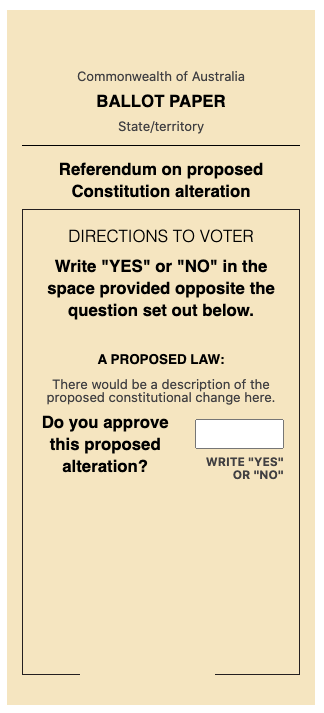
Will this Voice carry or will it become yet another referendum that fails to pass Australia’s history test
Much has been written about the “yes” and “no” campaigns for the Voice. Less has been written about the actual chances of the referendum being successful. There are lots of ways that we can try to determine the probability of the referendum being carried. We can look at polls. We can analyse the merits of…
-
A strong Indigenous Voice to Parliament is a sign of ‘healthy democracy’
The shadow Attorney-General, Michaelia Cash has asserted that the Voice to Parliament is divisive, and breaches discrimination laws. She is wrong. Seeking to overcome the systemic discrimination that Indigenous Australians face, is entirely consistent with our racial discrimination laws.
-

Government’s family law bill is a big step forward. But it doesn’t do enough to address family violence
The Labor government’s Family Law Amendment Bill 2023 is making its way quietly through Australia’s federal parliament. It will become one of the most important laws passed this year. It proposes to overhaul the family law system to make it “safer and simpler for separating families to navigate, and ensure the best interests of children are placed at its…
-

Victoria could protect LGBTQI people from hate. Why won’t the government act now?
For more than 20 years in Victoria, it has been unlawful to vilify people on the basis of their race or religion. Quite rightly, this means action can be taken against white supremacist speech, or hate speech which targets, for example, the Jewish or Muslim communities. But other communities in Victoria have no such protection. It…
-
Be assured the Voice will be a grassroots, diverse process
Australians have many questions about what The Voice to Parliament will look like, how it will work and why it is needed. These are all important questions and it is reasonable that people want to know the answers before they cast their vote in the referendum later this year. This piece explains the principles that…
-
Why the time is right for Australia to enact a Charter of Human Rights
Recent events demonstrate the most progress we have seen on enacting an Australian Charter of Human Rights in the last decade. It’s time that Australia joined all other Western nations by creating a comprehensive legal framework that supports and upholds the human rights of everyone living in Australia.
-
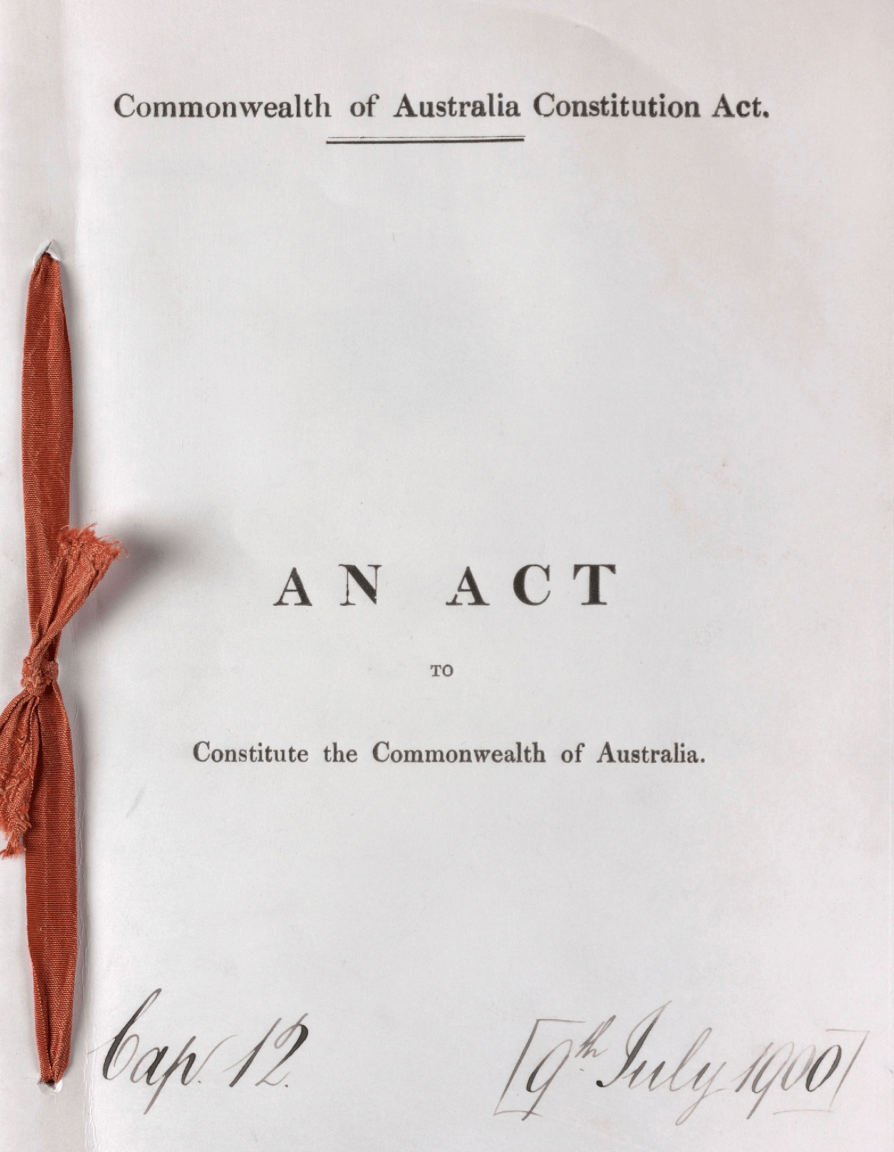
Legal experts weigh in on Indigenous Voice to Parliament referendum question
Now that we have the wording of the constitutional amendment and the referendum question, it is important to consider what these words actually mean and whether there is anything in the proposed text that we should be worried about.
-

The Voice: nothing to fear
John Farnham’s 1980s hit You’re the Voice opens with the lines ‘We have the chance to turn the pages over / We can write what we want to write.’ This nicely fits what Australians will do later this year when they vote in a referendum to enshrine an Aboriginal and Torres Strait Islander Voice in…
-
Anti-trans hate. How do we make sure Australia doesn’t go down the same path as the US and UK?
Transgender people once again find themselves in the middle of a media storm, stemming from a clash between anti-trans groups (including neo-Nazis) and trans and gender-diverse (TGD) people in front of Parliament House in Melbourne on 18 March.
-

International Women’s Day must be inclusive of ALL women
Since the early 1900s, women have used International Women’s Day (IWD) to demand equality; fight for equal pay, better workplace conditions, and the right to vote. In 2023, IWD continues to be a platform to advocate for women’s rights, and it is more important than ever to remember that this day is for, and about, ALL women, not…
-

Voice to Parliament: Debunking 10 myths and misconceptions
The Uluru Statement from the Heart is a generous invitation to all Australians from First Nations peoples to walk together towards a better future. Having a referendum on a First Nations Voice to Parliament is the first step on that walk; a chance to change the Constitution to enable First Nations people to be heard in matters that affect…
-

Religious schools can build a community of faith without discriminating. The law should reflect that
Last month, the ALRC released its consultation paper. It recommended the exceptions in federal discrimination law allowing religious schools to discriminate be removed.In response, some faith leaders and commentators have argued the ALRC proposals threaten the future of religious education, represent a “fundamental attack” on religious freedom, and would be “catastrophic” for religious schools.This is entirely untrue.
-
Human Rights Day 2022: A Federal Human Rights Act to Deliver Climate Justice
Against the background of Human Rights Day on 10 December 2022, the recent decision of the Land Court of Queensland in Waratah Coal Pty Ltd v Youth Verdict Ltd provides an illustration of the potential for human rights enshrined in law to be mobilised in claims for climate justice.
-
Torres Strait Islanders successful in landmark human rights complaint against Australia
In a historic decision, the United Nations (UN) Human Rights Committee found on Friday 23 September that Australia’s failure to adequately adapt to climate change violates the human rights of Torres Strait Islanders. It is a landmark victory worth celebrating as part of a broader trend in climate change litigation which has seen human rights…
-

‘Not my king’: do we have the right to protest the monarchy at a time of mourning?
During the present period of mourning for Queen Elizabeth II, public sensitivities in the United Kingdom and Australia are high. There’s strong sentiment in both countries in favour of showing respect for the queen’s death. Some people may wish to do this privately. Others will want to demonstrate their respect publicly by attending commemorations and…
-

There’s never been a better time: Enhancing the protection of human rights in Australia
Given that the Australian landscape appears ripe for increased protection of human rights: What are the human rights priorities in Australia?
-

A Robot Breaks the Finger of a 7-Year Old: A Lesson in the Need for Stronger Artificial Intelligence
Disturbing footage emerged this week of a chess-playing robot breaking the finger of a seven-year-old child during a tournament in Russia. Public commentary on this event highlights some concern in the community about the increasing use of robots in our society. Some people joked on social media that the robot was a “sore loser” and…
-
Now that Roe v Wade has been overturned, what are the consequences?
In May this year, I wrote a piece for Monash Lens following the leaking from the United States Supreme Court (SCOTUS) of a draft judgment overturning the 1973 decision of Roe v Wade. This is the seminal decision that provided constitutional protection to the right to abortion.
-

To give schools real choice about secular school chaplains, latest change needs to go further
New federal Education Minister Jason Clare has announced a change to the National School Chaplaincy Program to allow schools to “choose” between having a religious chaplain and having a professionally qualified well-being worker. The opposition has criticised the announcement as effectively meaning “the end of many school chaplains”. So what’s the fuss about?
-

Russia’s invasion is wreaking havoc with surrogacy in Ukraine. It shows why Australia must change its laws
Russia’s invasion of Ukraine is a nightmare for prospective parents engaged in surrogacy arrangements in the country. Ukraine has become a popular destination for surrogacy. While exact numbers are difficult to obtain, it’s estimated between 2,000 and 2,500 babies are born each year via surrogacy in Ukraine.
-

Explainer: The international courts investigating Russia’s Ukraine invasion, and how they differ
Last week, it was announced that the International Criminal Court (ICC) prosecutor was opening an investigation into the Russian invasion of Ukraine, examining whether any war crimes had been committed. Then this week, the International Court of Justice (ICJ) held a preliminary hearing into the Ukrainian demand that it issue an emergency order that Russia stop its…
-

Automating Government Decisions: The Human Rights Implications Of Technology
By Maria O’Sullivan Governments around the world are increasingly using technology to assist them to make important decisions that affect human rights. This expansion in the automation of government decision-making is due to a number of factors, including the availability of huge volumes of data and the push by governments to make decision-making more efficient…
-

ANNUAL HUMAN RIGHTS CONFERENCE: HUMAN RIGHTS ’19
By Andrea Olivares Jones In June this year, the Castan Centre was again proud to host our Annual Human Rights Conference – ‘Human Rights ‘19’, welcoming human rights leaders, professionals and advocates for the only Australian conference of its kind. This year, we covered diverse and critical human rights issues including the death penalty, guardianship…
-

CHILDREN OF FOREIGN FIGHTERS: AUSTRALIA’S RESPONSIBILITY TO REPATRIATE
By Andrea Olivares Jones & Karin Frodé The 30th anniversary of the UN Convention on the Rights of the Child (CRC) presents an important moment for States parties to strengthen their efforts to protect the rights of all children, including those associated with the Islamic State. Since 2012, an estimated 230 Australians have travelled abroad…
-
Descendants of Jewish families who fled Nazi Germany still being denied citizenship
By Caroline Henckels, Monash University Germany’s constitution contains a provision that permits citizenship to be granted to descendants of persons stripped of their German citizenship by the former Nazi regime for political, racial or religious reasons. In practice, this provision, Article 116(2), is mostly – although not exclusively – directed at descendants of Jewish refugees from Germany.…
-
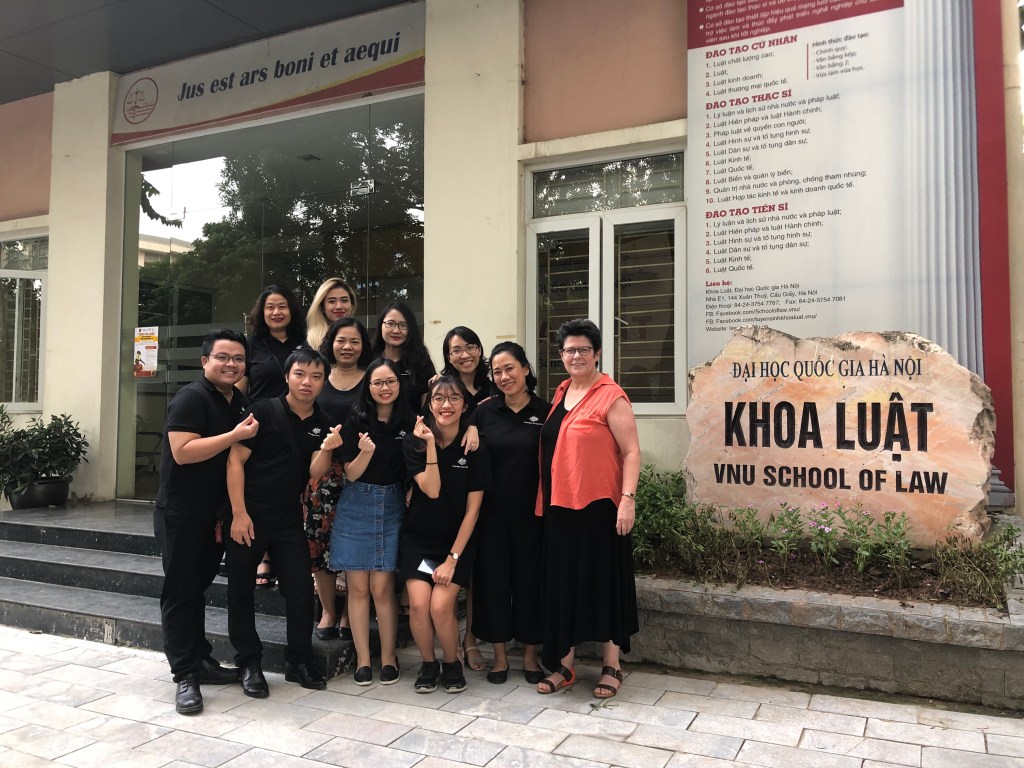
HUMAN RIGHTS COLLABORATION: CASTAN CENTRE ACADEMICS TRAVEL TO VIETNAM
In July and August, academics from the Castan Centre for Human Rights Law had the pleasure of returning to Vietnam as part of our multi-year cooperative project with VNU School of Law to strengthen human rights education in Vietnam. Our Director, Sarah Joseph, along with Deputy Director Joanna Kyriakis and Castan Centre Associates Heli Askola…
-

Facebook’s Dilemmas With Hate Speech, Fake Speech And Free Speech
By Sarah Joseph, Monash University If Facebook was an experiment in creating a true “marketplace of ideas,” the results are disappointing, naively utopian and sometimes dangerous. Yet the platform has no easy solution for the daunting problem of moderating its two billion subscribers. Social media provides an unprecedented mechanism for all people — or at…
-

A Voice to Parliament – the change we need
By Melissa Castan and Kate Galloway An ongoing inability to consult has caused failure after failure in Indigenous policy, but a Voice to Parliament represents an opportunity for better governance and most importantly, self-determination, Melissa Castan and Kate Galloway write. Listening is the only way forward. Over two years since the launch of the Uluru Statement…
-

The Khashoggi report to the UN Human Rights Council and the Rights to Life of Journalists
On Wednesday, 25 June, the UN Special Rapporteur on Extrajudicial Killings and Summary Executions, Agnes Callamard, presented her annual report to the UN Human Rights Council, including the widely anticipated results of her inquiry into the murder of Jamal Khashoggi in the Saudi embassy in Turkey in October 2018. Jamal Khashoggi was a Saudi journalist…
-

Israel Folau, religious freedom and the limits of toleration
By Patrick Emerton The idea of religious freedom is important for liberalism. But the idea is not just an abstract one. It is an idea that has a history ― a context in which it came to be, in which it was seen to make sense. There is a certain sort of work it has…
-

LGBTIQ Rights Around the World: Marriage Equality and the Death Penalty Hide Wider Concerns
By Professor Paula Gerber Marriage equality and the death penalty for gays frequently receive the attention of the international media. Yet these two issues fail to capture the wider concerns of LGBTIQ people. In the space of just a few decades, talking about homosexuality has gone from being taboo to almost trendy, and in much…
-
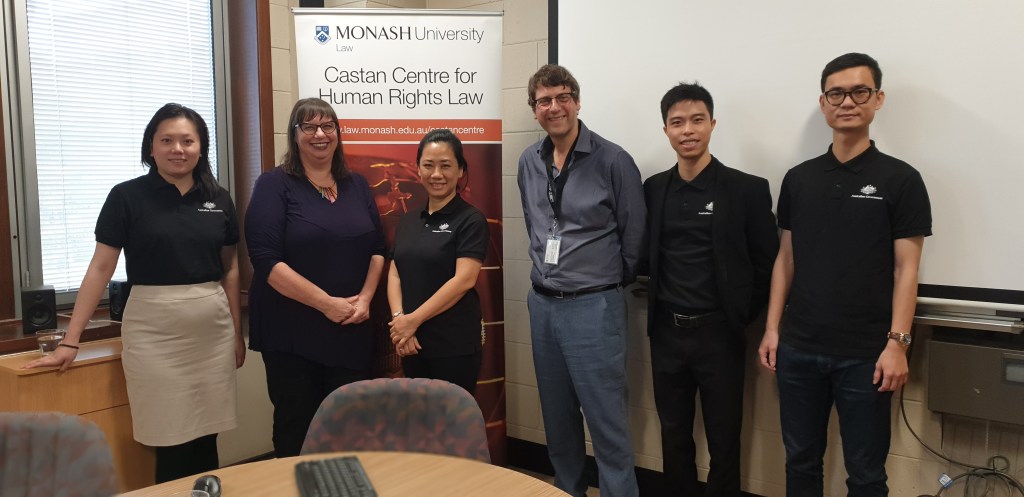
UPDATE: HUMAN RIGHTS COLLABORATION WITH VNU SCHOOL OF LAW
May has been busy time for us here at the Castan Centre, with many different programs in train, but undoubtedly the highlight was the visit by our colleagues from Vietnam National University School of Law. The visit formed part of a multi-year cooperative project between the Castan Centre and VNU. Under this program, the Castan…
-

THE HUMAN RIGHTS ARTS & FILM FESTIVAL – 2019 PROGRAM GUIDE
Whether you love romance, want to be inspired or see something with all the feels, HRAFF Co-Founder and Chairperson, Evelyn Tadros has the perfect set of festival recommendations just for you! The annual Human Rights Arts and Film Festival kicks off in just two days, and there are dozens of great films to see. Here’s…

